

Resilient cities: caring for water and soil is a collective commitment between the countryside and the city.
Resilient cities: caring for water and soil is a collective commitment between the countryside and the city.

Resilient cities: caring for water and soil is a collective commitment between the countryside and the city.
On the route of COP-30, Copaiba It reinforces the role of each citizen and public manager in building resilient cities that are better prepared to face extreme weather events.
With the increasing frequency of severe droughts, intense rainfall, and erosion affecting both rural and urban areas, the issue of climate resilience is gaining traction in global discussions and local contexts. In regions like the Circuito das Águas Paulista (Paulista Water Circuit) and southern Minas Gerais, where the relationship between countryside and city is deeply interdependent, the challenge of adapting during climate change involves shared care for water and soil, creating... resilient cities.
During the discussions of United Nations Climate Change Conference 2025 (COP-30), In conferences held in the Brazilian city of Belém, Pará, leaders and scientists have reiterated that climate adaptation needs to start from the bottom up, with strengthened communities, active municipalities, and citizens aware of their role in environmental preservation. This is the message that... Copaiba Environmental Association, based in Socorro (SP), has sought to bring this to the population of the region, as pointed out by Camila Conti, president of Copaiba and architect and urban planner.
“Climate resilience is not a distant, office-bound agenda. It is present in the daily life of every municipality, in the rural road that floods, in the runoff that washes away the soil, in the spring that dries up, or in the erosion that cuts through a property, in the changes that affect agricultural production and consequently the price of food. Therefore, it is essential that the population understands that it has an active role in this process, both in holding public authorities accountable and in adopting good water and soil management practices,” he states.
We need resilient cities.
In this sense, in municipalities in southern Minas Gerais and the Circuito das Águas region, rural roads play an essential role in the local economy, connecting properties, allowing the flow of production, and linking small communities, but they have also represented points of environmental vulnerability. “Often, the problem starts small, with a poorly drained embankment or a flash flood coming down from a neighboring property. When the water has nowhere to infiltrate, it gains force and destroys the road. This doesn't only affect rural producers; it affects school transportation, tourism, and water supply,” explains Camila.
According to the president of Copaiba, Water management needs to be a collective effort: “The municipality has the responsibility to keep the roads well-drained, but the rural landowner must also ensure that water from their property does not run off onto the road. When each side does its part, everyone wins. When one fails, the loss affects everyone.”.
This vision of shared responsibility is central to building resilient cities, "Resilience is a concept that, according to the UN, refers to municipalities capable of preventing, resisting, and recovering from extreme weather events, such as floods, landslides, and prolonged droughts. 'Resilience is not just reacting to impacts, it's anticipating them. And that involves territorial planning, care for water sources, and investment in green infrastructure,' adds Camila.".
Countryside and city: one basin, one destiny.
For the Copaiba, For those who have been working for over 25 years on forest restoration and the conservation of springs in the Peixe River basin, thinking about climate resilience also means recognizing that the countryside and the city are part of the same water system. The water that flows down the hillside and crosses a rural road is the same water that feeds the river that supplies urban centers.
“It’s common to think that environmental actions are isolated, but the water cycle connects everything. When rural producers create contour lines, plant trees on riverbanks, and prevent surface runoff, they are directly contributing to the city’s water security. And when urban public authorities invest in permeable areas and the proper management of rainwater, they are also protecting the countryside,” emphasizes Camila.
The president of the Association also emphasizes that community engagement is the starting point for any transformation: “People need to understand that resilience is not built alone. It is a collective, continuous effort that requires dialogue between citizens, producers, and managers. And that is what we want to inspire: that people look at their municipalities and begin to care for them with the same zeal they have for their homes.”.
As the world discusses, in international conferences, ways to contain global warming and adapt cities to new climate realities, the experience of Copaiba This shows that the most effective solutions originate from the territory. “There is no single model. Each municipality needs to find its own strategies, based on its characteristics, climate, terrain, and culture. But the common point is clear: we need to take care of the water, the soil, and the people, and this is only possible when everyone gets involved,” concludes Camila Conti.
The message that remains, amidst all COP-30, The truth is that resilience begins at home, in the countryside, on the street, and on the road. Building it is an act of citizenship, of mutual care, and of a vision for the future.
Learn more about Copaíba's work. Click here!
Share!
Latest publications
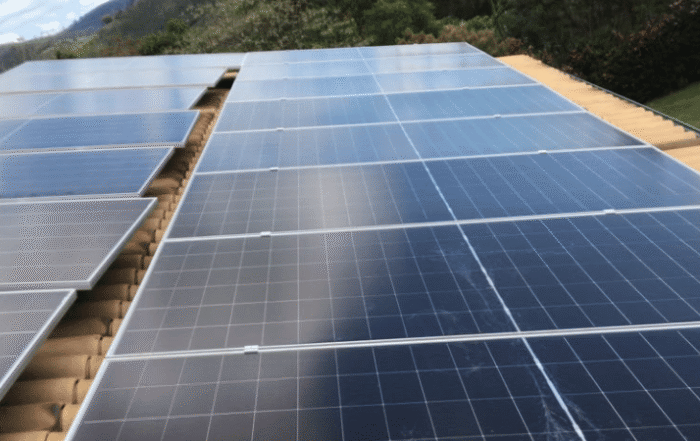
Copaíba adopts photovoltaic system and reinforces commitment to sustainability.
Copaíba adopts photovoltaic system and reinforces commitment to sustainability. The Copaíba Environmental Association has taken another decisive step in [...]
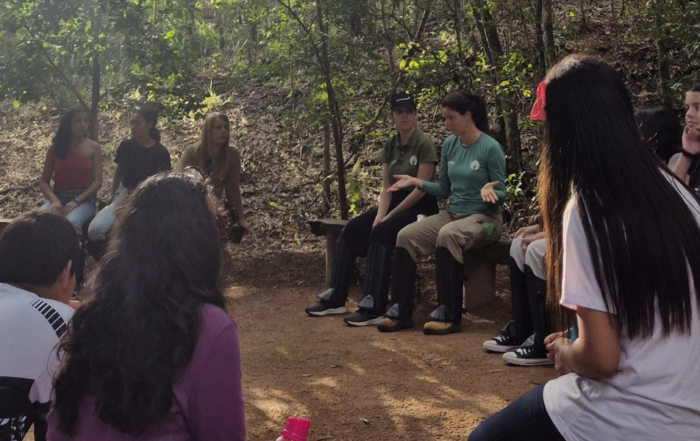
Living in contact with nature is now a right for children.
Living in contact with nature is now a right for children. On September 22, 2026, it was [...]
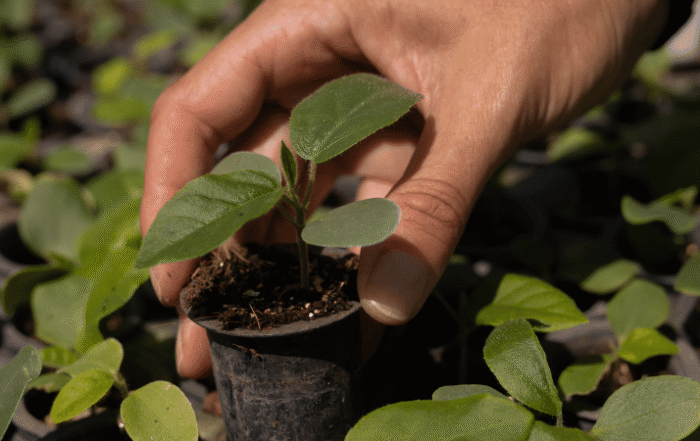
From Seed to Planting: The bottleneck that threatens the restoration of the Atlantic Forest.
From Seed to Planting: The bottleneck threatening the restoration of the Atlantic Forest. Miscommunication between those who produce seedlings [...]


