

In the shade of a mango tree: Paulo Freire Square
In the shade of a mango tree: Paulo Freire Square

Being a person of vision means having the ability to see beyond the immediate present, understanding the scope of resources and challenges, and above all, knowing how to take advantage of the opportunities that present themselves, and create them when difficulties arise. It is not just about having ideas, but also involves action and execution, capable of turning them into reality.
An important person of vision of our times, without a doubt, was Paulo Freire. Born in 1921 in Brazil, he became a renowned educator, philosopher and education theorist, known worldwide for his progressive and innovative ideas.
He was an ardent advocate of education as a means of liberation and social transformation. Freire believed that education should not be a unidirectional process, where knowledge is simply transmitted from teacher to student. Instead, he defended education as an interactive dialogue, in which teachers and students learn together, collaborating to build knowledge. For Freire, education is a process of awareness, in which students are encouraged to question unjust social structures and work to transform them.
Many of Paulo Freire's classes took place under trees, and are a vivid example of his educational approach. Freire believed that the learning environment need not be limited to the four walls of a traditional classroom. He valued direct contact with nature and the local community as ways to enrich education.
“At the shadow of this mango tree” is a book where Freire talks about reflections in his childhood and youth, which he made in his backyard, under the shade of one of them. The mango tree provided shade and coolness, while the surrounding nature served as a stimulus for reflection and connection with the natural world.
Paulo Freire's ideas continue to inspire educators and scholars around the world. His work influenced several pedagogical approaches and educational policies, highlighting the importance of awareness, active student participation and the search for a liberating education.

Of the legacy that was not lost with time
Vision, action, execution and reality are the words that define this work done by mother and son, Madalena and Mateus, collaborators of Associação Ambientalista Copaíba. From the observation of a need, they looked for means and resources to execute the construction of the benches fixed close to the Viveiro Florestal Copaíba.
This space was named “Praça Paulo Freire” and will be used, as well as its honoree, for environmental education actions. As many know, the Association is also an educational space, where hundreds of people annually attend, learn, experience and multiply their knowledge.
“The objective of the Copaíba Environmental Education Program is to reconnect people with nature, raising awareness about the importance of conservation and restoration of ecosystems, encouraging the formation of a restorative generation, especially in the Atlantic Forest.” Points out Tatiana Terasin, Coordinator of Environmental Education, she also completes by saying: “From Freire's perspective, awareness is not a magic pill that transforms the other, but rather a continuous process of sharing knowledge and transforming the world. According to Paulo Freire:
[…] awareness is a historic commitment. It is also historical consciousness: it is a critical insertion in history, it implies that men assume the role of subjects who make and remake the world. It demands that men create their existence with material that life offers them... (FREIRE, 1979)
Copaíba would like to express gratitude to Paulo Freire for the services provided in favor of education, which reverberate until today, empowering millions of people around the world. And also to Madalena and Mateus, who, through observation and proactivity, created a new environment that is already being used by Environmental Education, in the shade of a mango tree.
FREIRE, Paulo Conscientization: theory and practice of liberation: an introduction to Paulo Freire's thought [translation by Kátia de Mello e Silva; technical review by Benedito Eliseu Leite Cintra]. – São Paulo: Cortez & Moraes, 1979.
Share!
Latest publications
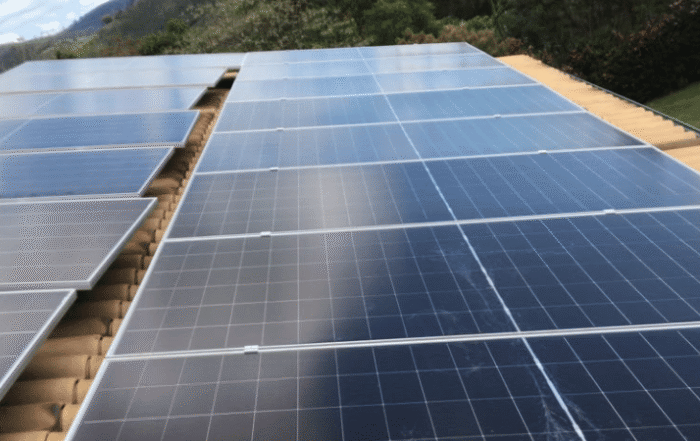
Copaíba adopts photovoltaic system and reinforces commitment to sustainability.
Copaíba adopts photovoltaic system and reinforces commitment to sustainability. The Copaíba Environmental Association has taken another decisive step in [...]
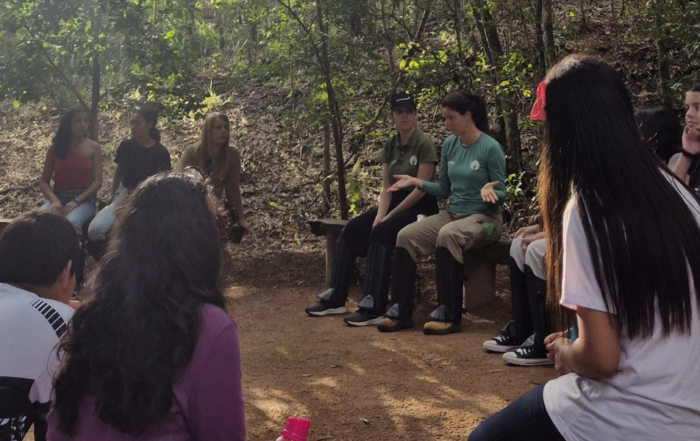
Living in contact with nature is now a right for children.
Living in contact with nature is now a right for children. On September 22, 2026, it was [...]
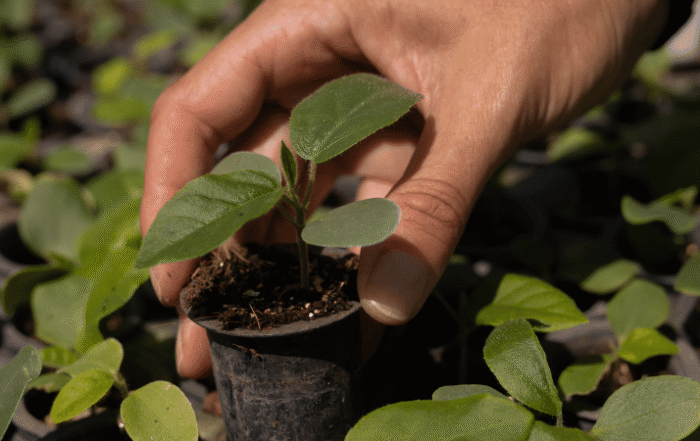
From Seed to Planting: The bottleneck that threatens the restoration of the Atlantic Forest.
From Seed to Planting: The bottleneck threatening the restoration of the Atlantic Forest. Miscommunication between those who produce seedlings [...]


