

Preserving native trees is essential to contain floods, highlights Copaíba
Preserving native trees is essential to contain floods, highlights Copaíba
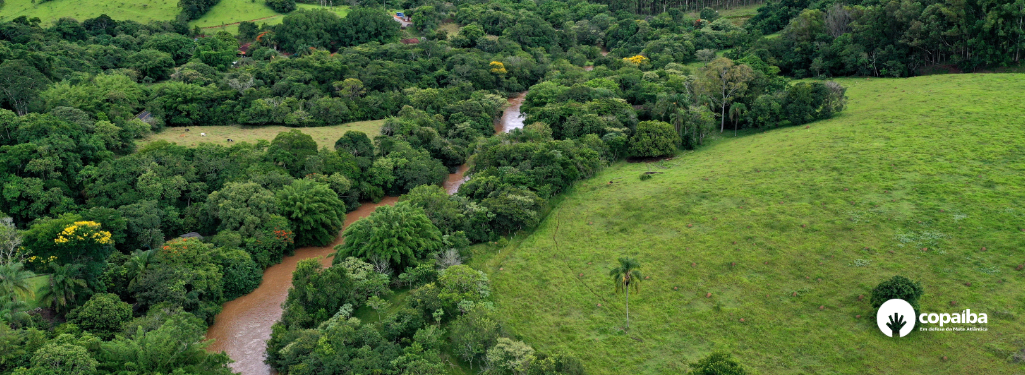
Preserving native trees is essential to contain floods, highlights Copaíba
An environmental association warns that removing riparian vegetation exposes cities to greater flood risks, while preserving native trees strengthens water security and urban resilience in the face of extreme rainfall.
As the heavy rain season approaches, a characteristic of the hottest seasons in southeastern Brazil, the urgency for sustainable solutions to address urban flooding grows. In this regard, recent studies by organizations such as Live to Planet and the University of Oklahoma recommend maintaining riparian forests, which act as veritable natural sponges on riverbanks, preventing flooding by slowing runoff, promoting water infiltration into the soil, and storing significant volumes of rainfall.
In the UK, for example, riparian forest plantings in the Laver and Skell catchments have shown concrete effects on reduction of average water speed by up to 50%, in addition to delaying the peak of flooding by up to 55 minutes, reducing the impact on nearby urban areas. In the Brazilian Cerrado, in the Corumbá IV River basin, the recovery of permanent preservation areas (APPs) reduced 27% sediment transport for watercourses, protecting springs and reservoirs, in addition to reducing siltation, which helps to avoid artificially raising the river level.
According to Camila Conti, an urban architect and president of the Copaíba Environmental Association, standing trees, especially in riparian zones, play an essential role in stabilizing riverbank soil, reducing river siltation, increasing water infiltration, and mitigating runoff velocity, acting as natural barriers against flooding. "Removing vegetation, on the other hand, can expose riverbanks to erosion and exacerbate flooding problems," she explains.
In Copaíba's assessment, the most extreme rainfall events have already shown that the region's cities are unprepared. Dramatic situations have been witnessed in recent years, reinforcing the need for consistent measures. However, many of the actions taken so far to reverse the problem have proven ambiguous. Two trends stand out: on the one hand, the decision to blame flooding on vegetation along the banks, resulting in "cleaning" interventions in the gutters that, in practice, remove vegetation and leave the soil exposed; on the other, the straightening reduces the space required for the river's natural flooding, in addition to allowing the water to flow downstream faster because it travels a shorter route.
Another point to note is that, in general, more urbanized areas are preferred for these interventions, often carried out with limited technical resources. The use of machinery to excavate riverbanks and riverbeds leaves a trail of loose soil that is subsequently washed into rivers, increasing siltation, including in downstream areas, which creates problems for other areas in the urban and rural areas.
Copaíba questions two central aspects of this scenario: first, the legality of such interventions, which involve permanent preservation areas and the removal of native vegetation without clear environmental licensing. Second, the inadequacy of these structural solutions, which fail to address the root causes of the problem and, in some cases, may even exacerbate it. This is why the organization insists on the need for "non-structural" measures that reconcile urban planning, environmental conservation, and social participation.
Flooding must be addressed with a comprehensive view of the river basin. A river is not just its bed, but also includes its headwaters and slopes, which contribute to the volume of water during rainy seasons. In this context, it is essential to promote the conservation and restoration of native vegetation upstream, as well as to create spaces for rivers to occupy during floods, preventing construction and landfilling in these areas and implementing river parks to retain water.
These discussions are particularly relevant in the Peixe and Camanducaia river basins, which run through the region and have steeply sloping courses. This characteristic increases water flow velocity, favoring erosion and increasing the vulnerability of riverbanks. In these cases, the presence of native vegetation is even more crucial, both in riparian forests and in groundwater recharge areas, springs, and buffer zones that need to be maintained or created in the headwaters of cities. Removing these formations not only accelerates the erosion process but also compromises infiltration capacity and regional water resilience.
These ecological services only produce lasting results when combined with land use and occupation policies. Preserving isolated forest fragments is not enough if the surrounding watersheds remain under pressure from disorderly urban densification. Removing vegetation weakens riverbanks and compromises water infiltration, while expansion into headwater areas and valley bottoms intensifies surface runoff and increases the load of diffuse pollution, dragging waste, oil, and dust into waterways.
"In this scenario, preparing cities for the rainy season cannot be limited to engineering works or pipelines: urban planning needs to take on a central role in water management," says Ana Paula Balderi, Ecological Restoration Coordinator at the Copaíba Environmental Association.
Necessary measures
Given this scenario, Copaíba experts emphasize the importance of so-called "non-structural" macro-drainage measures, which involve not only major construction projects but also the integration of urban planning and environmental conservation. These include:
- Reduce the speed of flow, maintaining the natural riverbeds and avoiding straightening that accelerates the current;
- Preserve and restore vegetated areas to reduce erosion, improve water infiltration and sustain aquatic biodiversity;
- Carry out integrated soil conservation and native vegetation restoration actions, upstream and in rural areas, thus preventing water from reaching watercourses too quickly and reducing overflow;
- Protect natural areas from flooding, prohibiting the occupation and filling of spaces such as marshes, floodplains and low-lying areas.
- Ensure areas of controlled flooding, allowing rivers to spread during times of high water, as floods are natural phenomena that require space to occur without causing tragedies.
"Protecting and restoring native vegetation is not only an environmental action, but also a public safety measure. Standing trees hold the soil, protect springs, and reduce the impacts of floods. Removing them compromises the resilience of cities in the face of increasingly intense rainfall," explains Flávia Balderi, Executive Secretary of Copaíba.
The Copaíba warning becomes even more relevant in a context of climate change, in which extreme rainfall events are becoming more frequent and intense. For the organization, adapting cities necessarily requires a combination of solutions: in addition to engineering projects, investing in the restoration of riparian vegetation, the conservation of valley bottoms, and urban development guidelines that respect the natural limits of rivers is essential to mitigate flooding and build lasting urban resilience.
More about Copaiba
Founded in 1999 by a group of friends concerned about the degradation of the Atlantic Forest in the municipality of Socorro, São Paulo, the Copaíba Environmental Association is a nonprofit organization, qualified as a Civil Society Organization of Public Interest (OSCIP), operating in 19 municipalities in eastern São Paulo state and southern Minas Gerais. Currently, the association promotes ecological restoration projects and programs; native seedling production; environmental education initiatives; and participation in public policy. In total, it has produced over 4 million seedlings, 300 partner landowners, restored 713 hectares, and 40,000 participants in environmental education experiences. Learn more at: https://copaiba.org.br/.
Share!
Latest publications
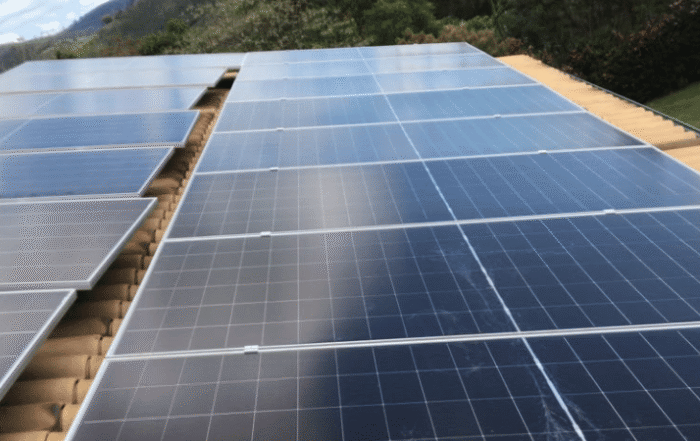
Copaíba adopts photovoltaic system and reinforces commitment to sustainability.
Copaíba adopts photovoltaic system and reinforces commitment to sustainability. The Copaíba Environmental Association has taken another decisive step in [...]
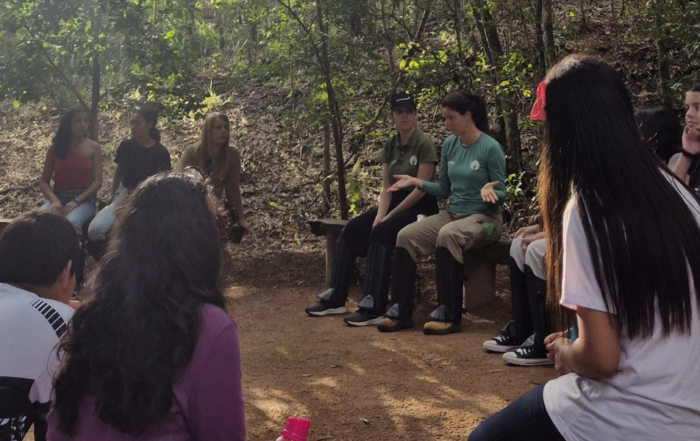
Living in contact with nature is now a right for children.
Living in contact with nature is now a right for children. On September 22, 2026, it was [...]
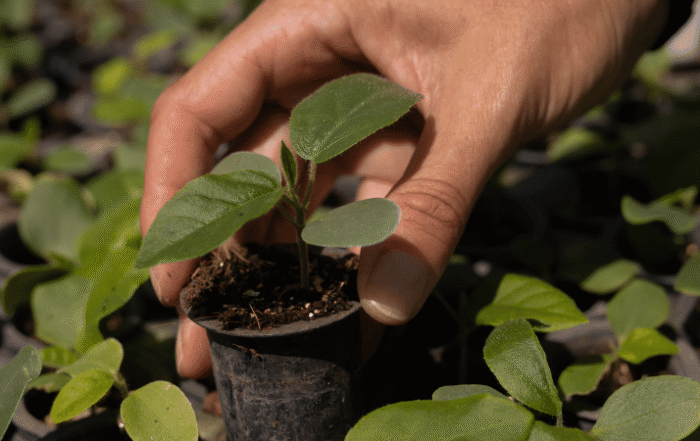
From Seed to Planting: The bottleneck that threatens the restoration of the Atlantic Forest.
From Seed to Planting: The bottleneck threatening the restoration of the Atlantic Forest. Miscommunication between those who produce seedlings [...]


