

Innovation in Ecological Restoration: Test using a drone to disperse native seeds
Innovation in Ecological Restoration: Test using a drone to disperse native seeds

The leading environmental management company, Ambipar, in partnership with the Associação Ambientalista Copaíba and the company Sylvamo-Brasil, through an innovative project, is testing the use of drones to disperse seeds of native species on a rural property located in Socorro/SP – a bold step towards ecological restoration.
The initiative aims to address the challenges of restoring degraded ecosystems, especially in extensive and difficult-to-access areas. The use of drones aims to speed up the sowing process and reach areas that would be inaccessible by conventional methods.
The seed dispersal initially took place in February and was attended by technicians and collaborators from the project partners, who were able to follow the process and answer questions during the flights. A second moment will take place this month of March, and in total, more than 5 kilos of seeds will be dispersed, from 23 native species, namely: Cotton, Dry flour, Figueira do brejo, Figueira-da-pedra, Wild tobacco, Aroeira pepper tree, Lixa, Quina de São Paulo, Angico-vermelho, Monjoleiro, Ipê Amarelo, Embaúba, Cedro, Guiaba, Quina, Taiúva, Araçá Purple, Araçazinho, Figueira Branca, Fumeiro, Mutambo, Pau-viola, and Sandra d'água, on 0.4 hectares of land. In addition to these species, Pigeon peas were also dispersed together, so that their roots can help fix the soil, preventing landslides.
The use of drones in environmental areas has proven to be an increasingly used tool. These unmanned aerial vehicles enable the collection of accurate and real-time data, allowing remote and difficult-to-access areas to be monitored efficiently. Furthermore, drones have been used in various activities, such as mapping areas and land cover, identifying species, detecting deforestation and forest fires, generating images and products for executing projects and planning actions, monitoring processes erosion, as well as seed dispersion and application of agrochemicals, two of the services carried out by Ambipar itself.
All seeds, supplied by Copaíba, underwent processing carried out by Ambipar, using a protective film, to guarantee their greater survival in the field. Smaller seeds were placed inside capsules along with nutritious substrates, while larger ones were dispersed directly into the soil. Both the capsules and the substrates are reused materials from other processes, ensuring the reuse of these products that would otherwise be discarded by the industry. Monitoring will be carried out by Copaíba and its technical team for a period of two years and the aim is to monitor the development of the seeds that germinate, the need for maintenance such as grass control, leaf-cutter ants, invasive species, etc.
The property, which is located in the Barrocão neighborhood, in Socorro, is a partner with Copaíba and is also restoring its APP areas through direct planting with already well-developed seedlings. The neighborhood represents a focal point for the municipality's restoration, as it is home to one of the streams that directly supply the Peixe River, which crosses the city. In January, during the heavy rains, it was proved how necessary it is to recover the forest around the tributaries and take measures to help better absorb and direct the water.
The test is being conducted with the aim of evaluating the effectiveness and benefits of this technique, such as the percentage of coverage after two years and the slowdown of the erosion process that is currently found in the area. Positive results are expected from this initiative, which, in addition to preserving and restoring a natural ecosystem that is difficult or impossible for human access, can also contribute to the advancement of technologies for nature conservation.

Drone dispersing seeds

Area of great erosion where seed dispersal occurred
Share!
Latest publications
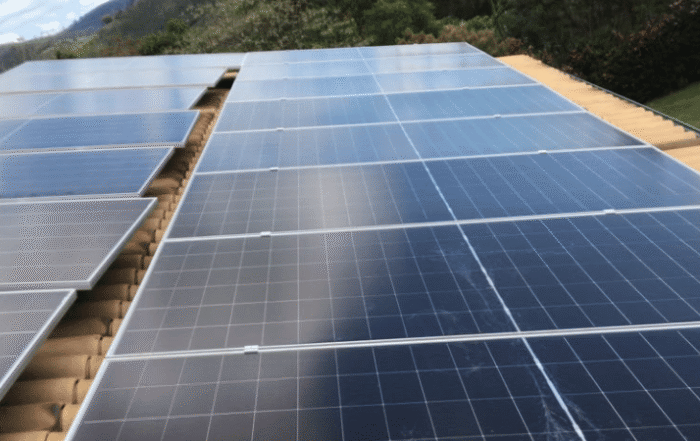
Copaíba adopts photovoltaic system and reinforces commitment to sustainability.
Copaíba adopts photovoltaic system and reinforces commitment to sustainability. The Copaíba Environmental Association has taken another decisive step in [...]
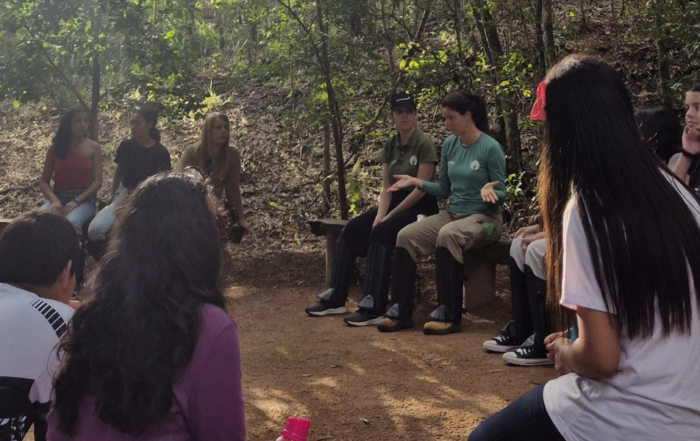
Living in contact with nature is now a right for children.
Living in contact with nature is now a right for children. On September 22, 2026, it was [...]
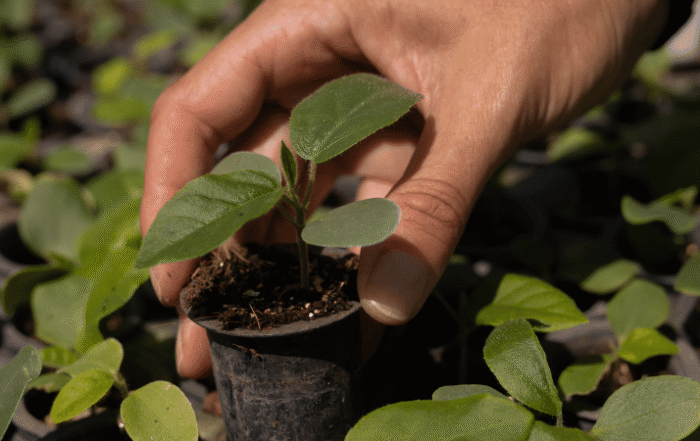
From Seed to Planting: The bottleneck that threatens the restoration of the Atlantic Forest.
From Seed to Planting: The bottleneck threatening the restoration of the Atlantic Forest. Miscommunication between those who produce seedlings [...]


