

Is it rain or smoke?
Is it rain or smoke?
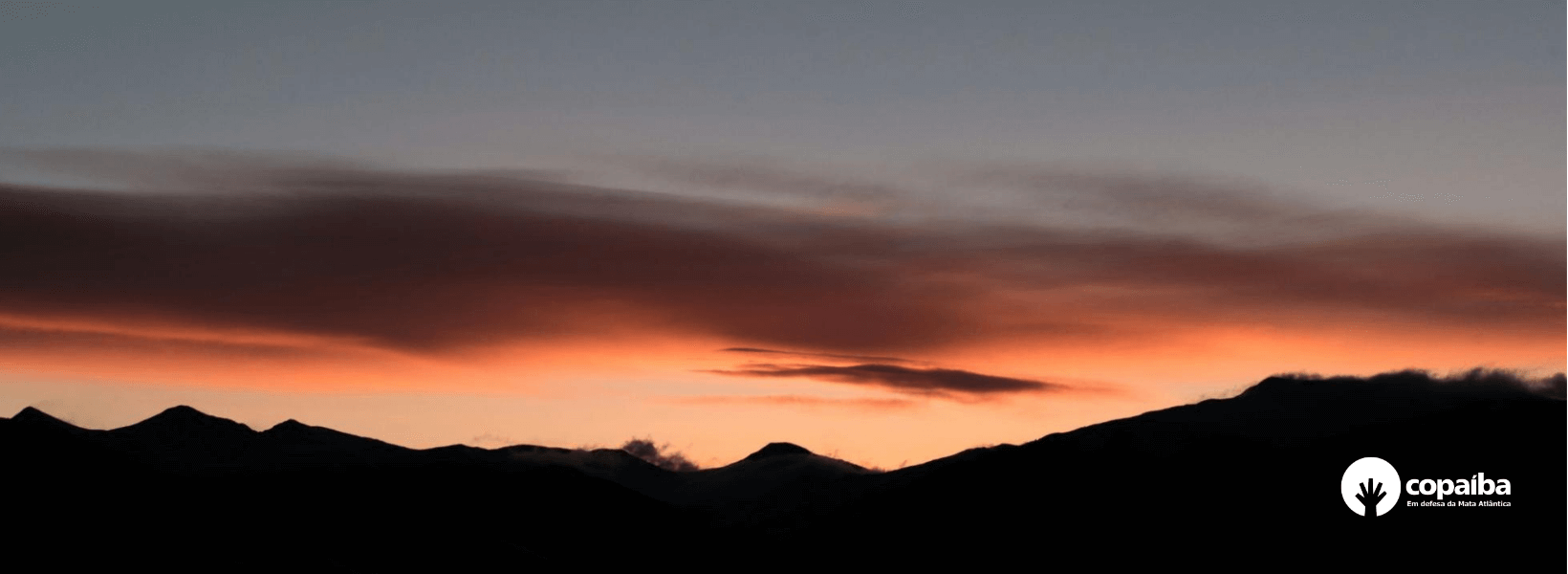
Is it rain or smoke? Learn how to differentiate dark clouds that take over the sky in the Southeast region this time of year.
Copaíba expert teaches how to recognize cloud types and protect yourself from drought
During the colder seasons, it's become common for the sky in Brazil's central-west, south, and southeast regions to take on a grayer tone, especially in the state of São Paulo. Contrary to popular belief, however, a cloudy sky doesn't always mean rain. In September 2024, for example, monitoring stations classified the air as "bad to very bad" in several parts of São Paulo, precisely due to a hot air system that formed above a cold layer near the ground, preventing the dispersion of pollutants and concentrating them in the lower layers of the atmosphere. This phenomenon, combined with a record increase in wildfires—with a focus on fires in the interior of São Paulo reaching record highs since 1998—created a thick plume of smoke that covered up to 80% of Brazilian territory, carried by hot, dry winds.
The environmental educator of Copaiba Environmental AssociationViviane Condotta Gabriel explains that the main difference between rain clouds and smoke clouds can be seen by paying attention to the sky's behavior and environmental conditions. "Rain clouds, especially those called cumulonimbus, are dense, have well-defined contours, and move quickly, often preceding strong winds, thunderstorms, or sudden drops in temperature," she points out.
As the environmentalist emphasizes, in the case of pollutant clouds forming, in turn, there is: a dark gray or brownish color and a dirty appearance, without defined contours, generally blocking the sun or leaving the sky opaque; a strong smell of burning, burning biomass or plastic/wood products; slow and uniform movement; unlike clouds that move quickly and have variations, smoke remains static or forms "cloudy" skies for days on end.
The Copaíba member also advises checking the weather forecast before assuming a storm and, above all, redoubling respiratory health care during these episodes of poor air quality. "If there's no rain in the forecast, but the sky is dark and the atmosphere is heavy, we're likely facing air pollution, which can aggravate rhinitis, asthma, and allergies," she says.
To help protect against the effects of pollution and drought, the Copaíba Environmental Association lists some tips; check it out:
- Avoid exposure during peak hours: in the afternoon, when low humidity combines with heat and pollution, prioritize indoor environments or those with filtered air.
- If you are in areas with visible smoke or near fires, consider wearing a PFF2/N95 mask when going out to avoid contamination with pollutants.
- Keep environments humid: Use humidifiers or humidify rooms with wet cloths in your home, especially at night — this improves air quality and reduces respiratory irritation.
- Avoid outdoor physical activity during pollution peaks or low humidity levels — especially when relative humidity is below 30 %.
- Monitor air quality using sources such as IQAir, Cetesb, or the AQICN app and follow official recommendations.
- Stay hydrated: dry air can make your throat and airways dry — drinking water frequently helps relieve irritation.
More about Copaiba
Founded in 1999 by a group of friends concerned about the degradation of the Atlantic Forest in the municipality of Socorro, São Paulo, the Copaíba Environmental Association is a non-profit organization, qualified as a Civil Society Organization of Public Interest (OSCIP), operating in 19 municipalities in the eastern region of the state of São Paulo and southern Minas Gerais. Currently, the association promotes ecological restoration projects and programs; native seedling production; environmental education initiatives; and participation in public policies. In total, over 4 million seedlings have been produced, 300 partner landowners have been involved in the restoration of 713 hectares, and 40,000 have participated in environmental education experiences. Learn more at: https://copaiba.org.br/.
Share!
Latest publications
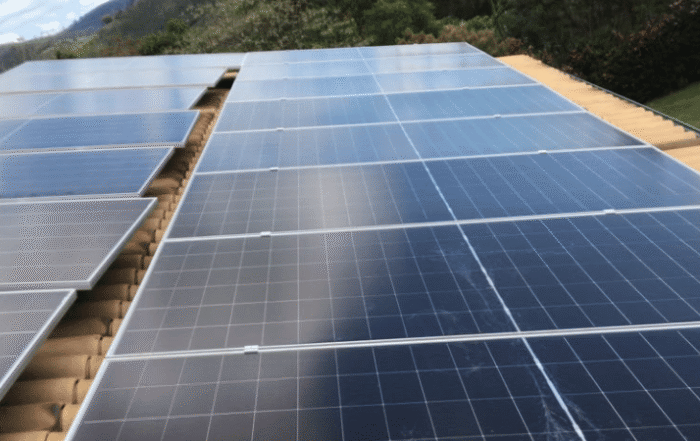
Copaíba adopts photovoltaic system and reinforces commitment to sustainability.
Copaíba adopts photovoltaic system and reinforces commitment to sustainability. The Copaíba Environmental Association has taken another decisive step in [...]
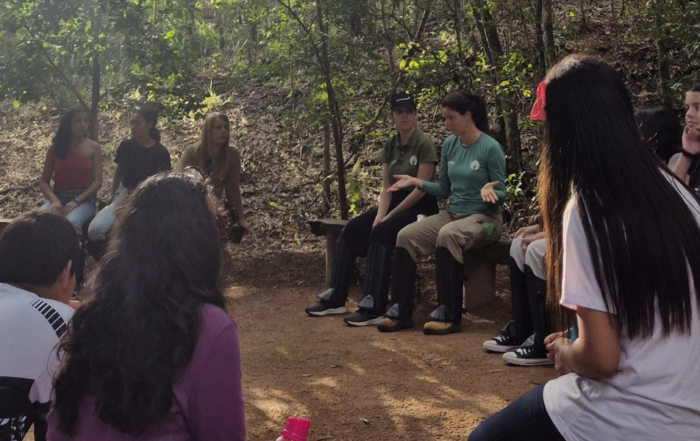
Living in contact with nature is now a right for children.
Living in contact with nature is now a right for children. On September 22, 2026, it was [...]
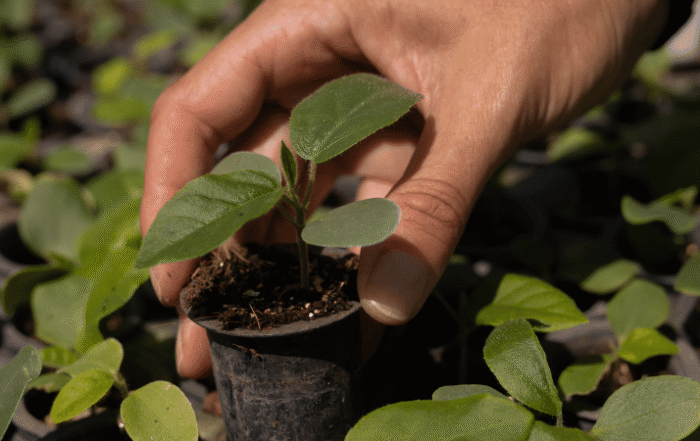
From Seed to Planting: The bottleneck that threatens the restoration of the Atlantic Forest.
From Seed to Planting: The bottleneck threatening the restoration of the Atlantic Forest. Miscommunication between those who produce seedlings [...]


