

Children and nature: environmental educator lists 5 tips to support parents in the process of integrating children with the environment
Children and nature: environmental educator lists 5 tips to support parents in the process of integrating children with the environment

Children and nature: environmental educator lists 5 tips to support parents in the process of integrating children with the environment
Initiative has the potential to combat childhood anxiety and contribute to building a more sustainable future, with the support of third sector organizations such as the Copaíba Environmental Association
A recent survey conducted by Aarhus University in Denmark reveals that children who grow up with little access to green spaces are up to 55% more likely to develop psychological disorders throughout adulthood. The study, published in the journal Proceedings of the National Academy of Sciences, followed more than 900 thousand children over a decade, establishing a direct relationship between contact with nature and mental health.
In Brazil and other countries, childhood professionals have been reporting a significant increase in symptoms such as irritability, attention deficit and compulsive behaviors among children who spend most of their time in urban environments, with few opportunities to play in natural areas. According to research released last year by the Ministry of Health, from 2014 to 2024, care for children aged 10 to 14 reporting symptoms of anxiety increased by approximately 2,500% in the Unified Health System.
American journalist and researcher Richard Louv, author of the book “The Last Child in the Wild”, is one of the leading voices on the subject. In his work, he coined the term “nature deficit disorder” to refer to the physical and emotional consequences of children’s disconnection from the natural world. “Children are being deprived of an essential source of learning, health and emotional balance. Nature offers unique stimuli that no technology can replicate,” says Louv.
In addition to the psychological impacts, contact with natural environments favors motor, cognitive and social development. A study of National Institute for Health and Welfare, from Finland, concluded that children who play daily in green areas have lower levels of inflammation in the body and a healthier intestinal microbiome, in addition to a greater capacity for emotional self-regulation.
The scenario contrasts with the reality of many urban children. Data from the British NGO The Wildlife Trusts indicate that they spend, on average, less than one hour a day outdoors — less time than prisoners in closed regimes. Similarly, the average screen time among children aged 5 to 12 already exceeds four hours a day, according to a survey by Common Sense Media.
Given the evidence, experts advocate an urgent change in attitude on the part of schools, families and public policy makers. Initiatives such as educational trails, school gardens, outdoor educational activities and easier access to urban parks are highlighted as effective strategies to reverse the situation.
“Contact with nature is not just recreation: it is a vital necessity for human development,” Louv sums up. In an increasingly technological world, reconnecting children with the natural environment could be the key to forming healthier, more resilient and more aware adults.
To support parents in the process of introducing children into closer contact with nature, Viviane Candotta Gabriel, a biologist by training and environmental educator at Copaiba Environmental Association list 5 easy tips to implement in your daily life:
1. Create small outdoor expeditions
Even if you live in urban areas, nearby parks, squares and green areas can be transformed into “expeditions” to observe plants, insects and birds. Encourage your child’s curiosity with questions like: “What kind of tree is this?” or “How many different types of leaves can we find today?” Copaíba, for example, offers free guided tours where children can have close contact with the environment.
- Set up a vegetable garden or garden at home
Growing vegetables, herbs or flowers in pots, flower beds or planters teaches about the cycles of nature, responsibility and patience. It is a sensory and engaging activity that encourages care for the environment and healthy eating.
3. Promote free play on land
Let your kids get dirty! Playing with mud, sand and leaves is essential for their motor, emotional and immunological development. Contact with the soil also promotes the diversity of the intestinal microbiota, which is essential for health.
4. Use wildlife observation as an educational activity
Carrying magnifying glasses, binoculars or notebooks to observe insects, birds or small animals turns any outing into a fun and scientific experience. Writing down what you see stimulates attention and interest in biodiversity.
5. Bring nature indoors
When it is not possible to go out, books about animal life, documentaries about ecosystems or even creating a terrarium with children can bring them closer to the natural world. The important thing is to cultivate a curious and respectful view of the life around them.
More about Copaiba
Created in 1999 by a group of friends who were concerned about the degradation of the Atlantic Forest in the municipality of Socorro-SP, the Copaíba Environmental Association is a non-profit organization, qualified as a Civil Society Organization of Public Interest (OSCIP) and which operates in 19 municipalities in the eastern region of the State of São Paulo and southern Minas Gerais. Currently, the association promotes ecological restoration projects and programs; production of native seedlings; environmental education initiatives and participation in public policies. In total, more than 4 million seedlings have been produced, 380 partner landowners, 713 hectares have been restored and 40 thousand participants in Environmental Education experiences. Learn more at: https://copaiba.org.br/.
Share!
Latest publications
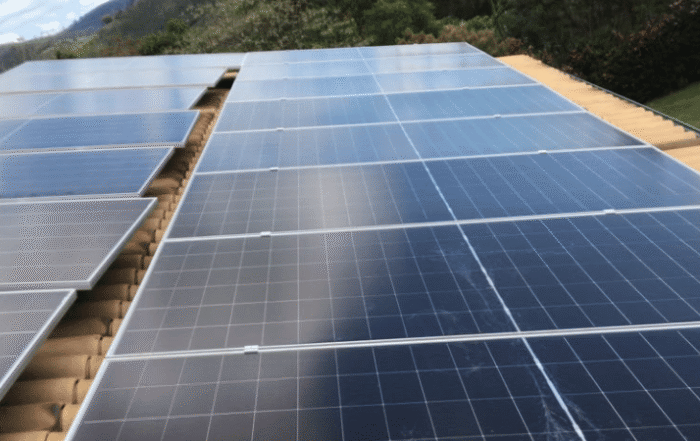
Copaíba adopts photovoltaic system and reinforces commitment to sustainability.
Copaíba adopts photovoltaic system and reinforces commitment to sustainability. The Copaíba Environmental Association has taken another decisive step in [...]
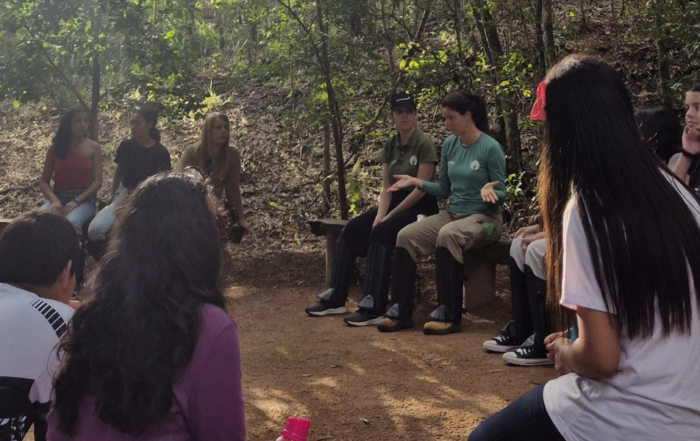
Living in contact with nature is now a right for children.
Living in contact with nature is now a right for children. On September 22, 2026, it was [...]
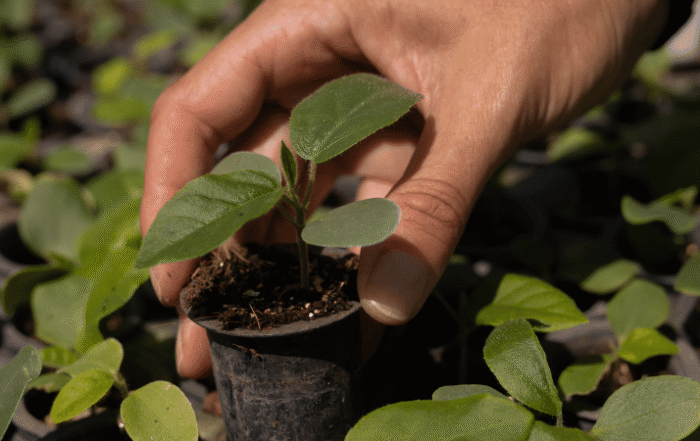
From Seed to Planting: The bottleneck that threatens the restoration of the Atlantic Forest.
From Seed to Planting: The bottleneck threatening the restoration of the Atlantic Forest. Miscommunication between those who produce seedlings [...]


