

How can mowing protect or harm urban biodiversity?
How can mowing protect or harm urban biodiversity?

How can mowing protect or harm urban biodiversity?
Between January and March 2025, several Brazilian municipalities recorded significant volumes of urban mowing, This indicates that vegetation grows more vigorously in the summer and requires attention from maintenance teams. The Municipal Transit and Urbanization Company of Londrina, in Paraná, for example, reported in its transparency report that, in the first half of this year, approximately 20.9 million square meters of public areas underwent mowing, including central reservations, squares, gardens, and green areas.
These numbers clearly illustrate the scale of maintenance work in cities, where teams cover large expanses of grass and vegetation to keep areas clean and accessible. However, this volume of mowing also highlights the potential impact on urban trees, especially when the activity is not carried out carefully. In many operations, young or adult trees can suffer serious injuries if the mower touches the trunk or base, compromising their health and creating vulnerabilities for pests and diseases.
What does Copaiba say?
For the Copaiba Environmental Association, This finding is a cause for great concern. During the urban mowing, When a brush cutter hits the trunk, the bark—equivalent to human skin—is damaged, and it is precisely in the bark that the phloem is located, the tissue responsible for transporting elaborated sap, essential for the plant's nutrition. Besides protecting against pests, diseases, and mechanical damage, the bark fulfills a vital function for the growth and stability of trees.
When this tissue is damaged, the phloem is exposed, becoming an entry point for decay fungi, termites, borers, leafcutter ants, and various pathogens that quickly colonize the injured tissue. Over time, recurring damage can lead to cavities, internal rot, and structural fragility, factors that significantly increase the risk of collapse.
The physiological impact is also severe. The tree needs to "compartmentalize" the damage, creating internal barriers to contain the invasion of microorganisms. This process is energy-intensive and reduces growth, increases water stress, and can trigger progressive decline. In cases of continuous injury at the base, partial or total girdling can occur, interrupting the flow of elaborated and raw sap, which causes trunk drying, weak regrowth, and eventual complete death.
Problems with improper urban mowing practices.
The effects of urban mowing The consequences of misguided urban tree planting are widespread: loss of shade, increased heat islands, reduced air quality, decreased water infiltration into the soil, exacerbating floods, and reduced biodiversity, affecting birds, pollinating insects, and other organisms that depend on trees for shelter and food. In other words, small management errors can generate significant and lasting environmental impacts.
That's precisely why, the Copaiba It emphasizes that simple management practices can prevent significant environmental losses. Among the main recommendations are:
- Keep your distance from the trunk. — Never touch the brush cutter to the tree, because even a light touch can cause injury; even when using nylon string, which many believe does not put the trunk at risk.
2. Create a wreath around the tree. — Leave a circle 30 to 50 cm wide without grass, or cover it with dry organic matter to reduce the need for mowing.
3. Use torso protectors. PVC pipes or specific protectors help prevent accidental impacts.
4. Perform the manual finishing. — In the last few centimeters closest to the trunk, replace the brush cutter with pruning shears or a hoe.
5. Guide and train the teams. Most harm occurs due to lack of information; training is the best prevention.
These guidelines, when consistently adopted by municipalities, transform routine maintenance into an ally of urban biodiversity. urban mowing It ceases to be merely a cleaning task and becomes an instrument for protecting trees and the life they sustain, ensuring that cities maintain their environmental services and the quality of life of their residents.
Learn more about Copaíba's work with public policies – Click here!
Share!
Latest publications
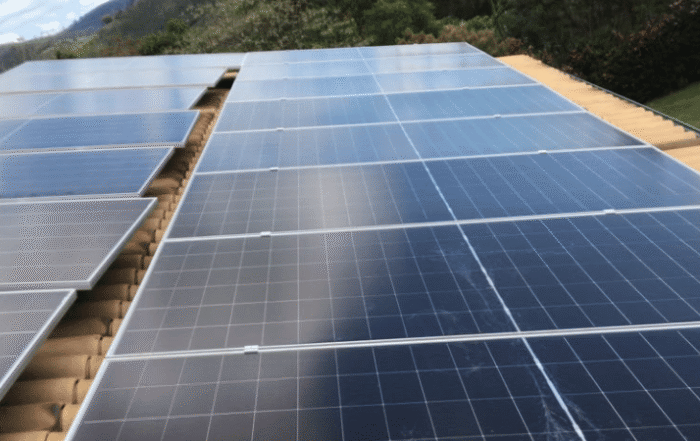
Copaíba adopts photovoltaic system and reinforces commitment to sustainability.
Copaíba adopts photovoltaic system and reinforces commitment to sustainability. The Copaíba Environmental Association has taken another decisive step in [...]
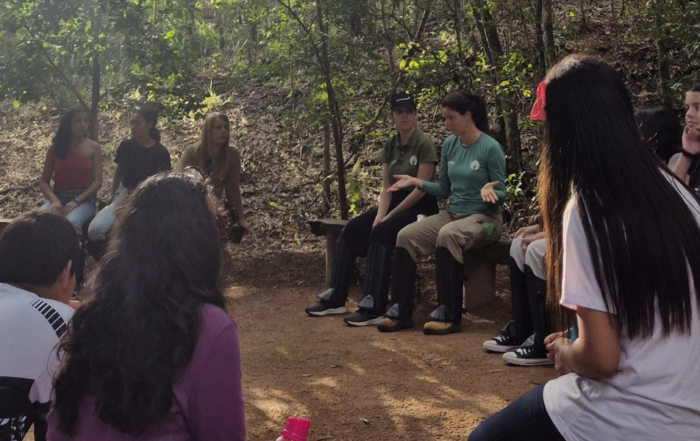
Living in contact with nature is now a right for children.
Living in contact with nature is now a right for children. On September 22, 2026, it was [...]
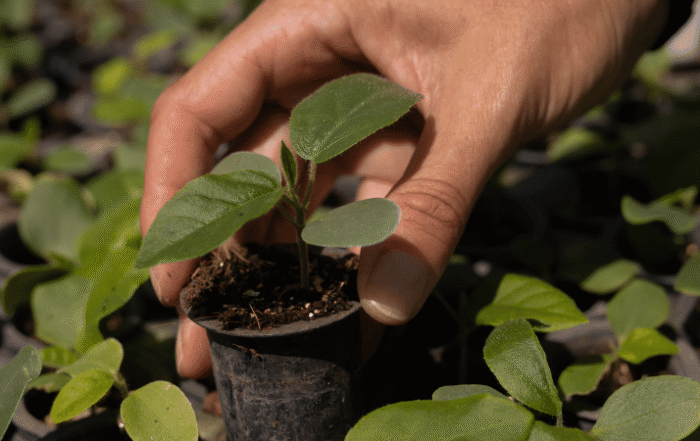
From Seed to Planting: The bottleneck that threatens the restoration of the Atlantic Forest.
From Seed to Planting: The bottleneck threatening the restoration of the Atlantic Forest. Miscommunication between those who produce seedlings [...]


