

The importance of collective care for rural roads.
The importance of collective care for rural roads.

The importance of collective care for rural roads.
During the rainy season, the collapse of rural roads threats to production, access, and security; Copaiba Environmental Association It reinforces that the restoration of riparian forests and the preservation of riverbanks are practical measures for prevention and resilience.
Recent estimates from the Brazilian Confederation of Agriculture and Livestock (CNA) indicate that there are approximately 2.2 million km² of [unclear/shoring] in Brazil. rural roads, Most of these roads are unpaved, and much of them are in poor condition, which directly harms agribusiness and local populations, causing logistical and economic losses, as well as impacting transportation in general. During the rainy season, these stretches become even more vulnerable, with increased rain erosivity and precipitation volume exacerbating siltation, lateral erosion, and flooding that deteriorate bridges, culverts, and the road surface itself—problems documented by technical studies and reports on hydrometeorological impacts on road infrastructure.
In this scenario, according to Embrapa, the forests that border rivers and streams (riparian forests) act as "natural brakes," reducing the speed of surface runoff, facilitating water infiltration into the soil, and decreasing the volume of sediment carried to waterways. These processes, together, mitigate localized flooding and the silting up of critical points under roads and bridges. Reports and research from Embrapa Regarding erosivity, they clarify that where vegetation cover is preserved, the risk of flash floods and road closures drops significantly during heavy rainfall events.
What does Copaiba say?
THE Copaiba Environmental Association, [Company Name], which has been working since 1999 on the restoration of native forests and the recovery of springs in the Socorro region (São Paulo state) and neighboring basins, has demonstrated in practice the benefits of riverbank restoration. In project reports, coordinator Ana Paula Balderi observes that restored areas begin, within a few years, to "protect the soil and the surroundings of the springs" and to "serve as an obstacle to runoff," reducing the speed of the water and favoring infiltration, an effect directly linked to a lower incidence of erosion near rural roads.
THE Copaiba The report documents restoration projects that already cover hundreds of hectares and emphasizes the need for public policies and community engagement to expand this action. Experts consulted by the organization and technical studies converge on concrete actions that combine environmental conservation and infrastructure maintenance: (1) maintaining or restoring vegetation strips along streams and springs; (2) planning culverts and drainage systems considering increased rainfall volume; (3) preventing deforestation and soil compaction near roads; (4) coordinating municipal and state programs for periodic maintenance of rural roads with forest restoration initiatives in the basins.
When rural landowners, municipalities, and NGOs work together, the benefits are numerous, such as a reduction in damage to the land. rural roads, Lower maintenance costs and greater safety for those who depend on these roads. Thus, the conservation of riverbanks and the restoration of riparian forests are not just environmental causes: they are investments in natural infrastructure that protect roads, crops, and people, especially during periods of heavy rainfall.
Recommendations
In this sense, the recommendation of Copaiba It is clear: integrated public policies, incentives for restoration, and community actions are ways to transform at-risk areas into resilient corridors and, in this way, reduce stoppages, losses, and risks on rural roads.
Click here Learn more about Copaiba's Ecological Restoration work.
Share!
Latest publications
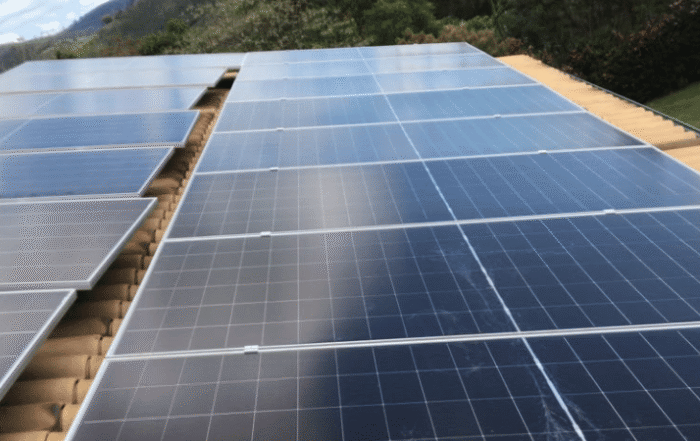
Copaíba adopts photovoltaic system and reinforces commitment to sustainability.
Copaíba adopts photovoltaic system and reinforces commitment to sustainability. The Copaíba Environmental Association has taken another decisive step in [...]
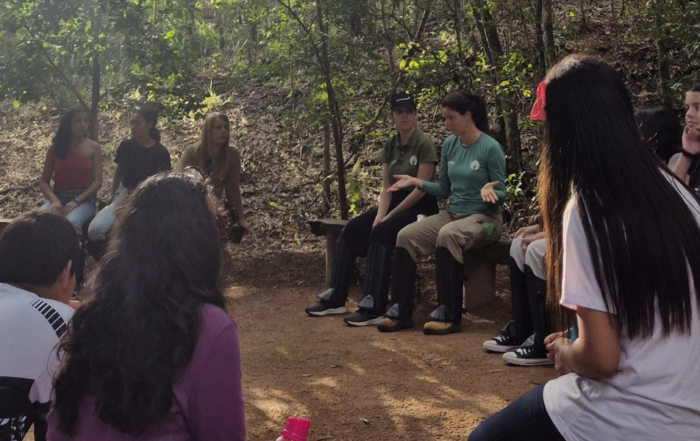
Living in contact with nature is now a right for children.
Living in contact with nature is now a right for children. On September 22, 2026, it was [...]
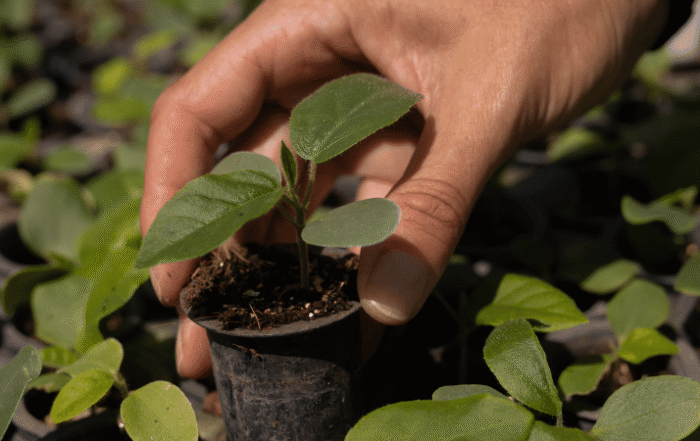
From Seed to Planting: The bottleneck that threatens the restoration of the Atlantic Forest.
From Seed to Planting: The bottleneck threatening the restoration of the Atlantic Forest. Miscommunication between those who produce seedlings [...]


