

Green manure: understand how this sustainable soil fertilization practice works and check out tips for implementing it
Green manure: understand how this sustainable soil fertilization practice works and check out tips for implementing it

Green manure: understand how this sustainable soil fertilization practice works and check out tips for implementing it
Copaíba Ecological Restoration Coordinator explains the potential of using specific plants to support the growth of others
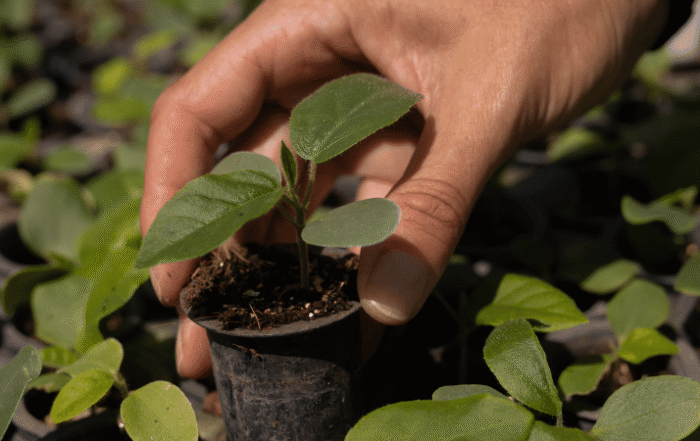
An ancient practice created by the Romans to increase the productivity of their crops, green manuring has been scientifically recognized as an agricultural technique since the 19th century and consists of growing specific plants alongside crops to improve soil fertility and structure. With the growth of environmental awareness in society and regenerative agriculture in the countryside, this type of fertilization has been increasingly adopted as a sustainable solution that optimizes agricultural production and reduces planting costs.
The benefits of green manure include: optimized fixation of atmospheric nitrogen, enriching the soil with the nutrient; the plant cover provided, which protects the soil against the direct action of rain and wind, reducing erosion; preventing the action of weeds, helping in the natural management of these species and improving the structure of the soil; in addition to decompacting the soil, improving its aeration and water retention capacity.
In Brazil, green manure has been used more frequently in soybean and corn plantations in the Cerrado, where legumes such as crotalaria and pigeon pea help to replenish nitrogen in the soil and increase crop productivity. The practice is also an ally of forest restoration actions, such as those implemented by Copaiba Environmental Association in the recovery of deforested areas of the Atlantic Forest, as explained by the institution's Ecological Restoration Coordinator, Ana Paula Balderi, highlighting the use of other plants in addition to legumes, such as sunflowers, corn, millet, which brings a mix of diversity to the planting.
“Green manure is an essential tool for ecological restoration and maintaining soil fertility, something we value highly here at the Copaíba Environmental Association. We work directly with the restoration of degraded areas and we know that healthy soil is the basis for forest growth and the protection of water resources. By using plants that fix nitrogen and improve soil structure, we can reduce the need for chemical inputs and strengthen natural ecosystems. This not only benefits farmers, who reap better results in the long term, but also contributes to the conservation of biodiversity,” he points out.
To support those interested in implementing green manure, Ana Paula lists essential tips; check it out:
Selection of species: Choose plants that are suitable for the climate and soil type of the region. Legumes, such as jack beans and crotalaria, are often used due to their ability to fix nitrogen. In the case of Copaíba, among the legumes used, Guandu stands out, a plant that plays the role of decompacting the soil and offers optimized protection to the seedlings due to its shrubby shape.
Planting season: Plan the planting of green manures in a way that facilitates the management of the main crops and respects the seasons appropriate for each type of plant, which can be carried out in the off-season or in rotation with other crops.
Management and incorporation: After adequate growth, plants can be mowed and left on the surface as mulch or incorporated into the soil to decompose, releasing nutrients and improving organic matter.
More about Copaiba
Created in 1999 by a group of friends who were concerned about the degradation of the Atlantic Forest in the municipality of Socorro-SP, the Copaíba Environmental Association is a non-profit organization, qualified as a Civil Society Organization of Public Interest (OSCIP) and which operates in 19 municipalities in the eastern region of the State of São Paulo and southern Minas Gerais. Currently, the association promotes ecological restoration projects and programs; production of native seedlings; environmental education initiatives and participation in public policies. In total, more than 4 million seedlings have been produced, 380 partner landowners, 713 hectares have been restored and 40 thousand participants in Environmental Education experiences. Learn more at: https://copaiba.org.br/.
Share!
Latest publications

Copaíba adopts photovoltaic system and reinforces commitment to sustainability.
Copaíba adopts photovoltaic system and reinforces commitment to sustainability. The Copaíba Environmental Association has taken another decisive step in [...]

Living in contact with nature is now a right for children.
Living in contact with nature is now a right for children. On September 22, 2026, it was [...]
From Seed to Planting: The bottleneck that threatens the restoration of the Atlantic Forest.
From Seed to Planting: The bottleneck threatening the restoration of the Atlantic Forest. Miscommunication between those who produce seedlings [...]


