

Living in contact with nature is now a right for children.
Living in contact with nature is now a right for children.
Living in contact with nature is now a right for children.
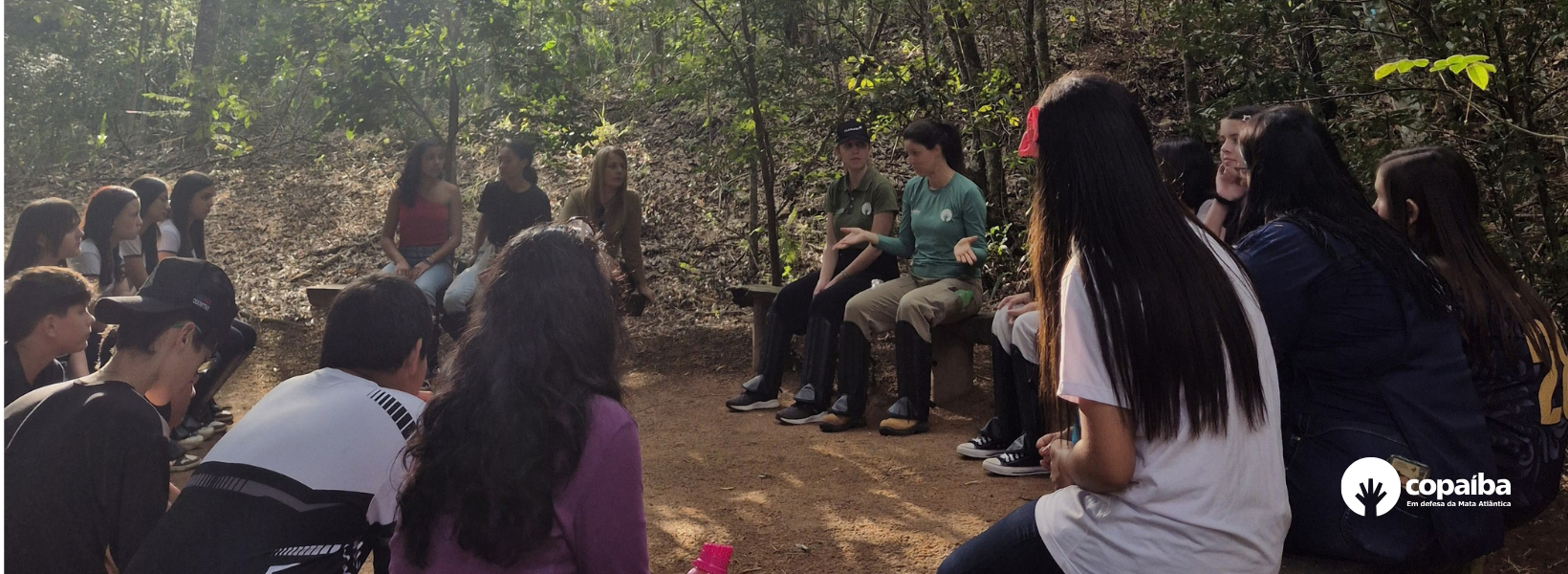
On September 22, 2026, Law No. 15,512 was enacted in Brazil, amending the Statute of Children and Adolescents (ECA) to establish the fundamental right of children and adolescents to access nature. It is nicknamed... “Environmental ECA” The new legislation was celebrated by the board and the entire environmental education team of... Copaiba Environmental Association, which has been working for years on connecting children and teenagers with nature as a way to transform society.
The new legislation goes against the principles of comprehensive protection and absolute priority foreseen in article 227 of the Federal Constitution and in the ECA itself, whose article 4 now expressly includes nature among the rights that must be guaranteed to children and adolescents.
Children's rights
THE Environmental ECA, The new law defines the right to nature as encompassing access to healthy environments, free play in green and blue areas, the strengthening of socio-affective bonds with the environment, and nature-based education. The law also establishes priority access and accessibility to squares, parks, Conservation Units, and public green areas near residences and schools for all children and adolescents.
Recent scientific research confirms the urgency of this measure. A 2024 study published by the University of Glasgow revealed that children who spend at least one hour a day outdoors have a 50% lower risk of developing mental disorders, while researchers at McGill University (Canada) demonstrated that just two hours a week of learning activities in nature is enough to significantly reduce stress, anxiety, and hyperactivity levels in elementary school students.
There is also the book “The Last Child in the Wild”, This book, written by Richard Louv and published in 2016 by Aquariana publishing house, presents a series of studies linking the presence of nature in children's lives to their physical, emotional, social, and academic well-being. Richard Louv, a journalist and founder of the Children and Nature Movement, first coined the term Nature Deficit Disorder (NDD), thus drawing the international community's attention to the negative impact of a lack of nature on children's lives.
Responsibilities of public authorities
In addition to determining children's rights, the Environmental ECA It also presents specific guidelines for public management to organize itself to guarantee this access for children. Among the priorities is city planning, which should encourage the creation of safe routes and playful paths for walking or cycling, naturalized squares and courtyards with play equipment, prioritizing the neighborhood scale and the school surroundings. School systems should integrate environmental and climate education into pedagogical strategies and school infrastructure. The standard guides the appreciation of native vegetation in courtyards, the creation of shaded areas, vegetable gardens, integrated water management, and ensuring accessibility for people with disabilities.
Copaiba Environmental Education
What is now becoming a national standard, approved by law and backed by science, is already a practical reality in our region. For years, the Copaiba In its environmental education initiatives, it precisely embodies the principles that underpin the new law.
Through its current environmental education program, Copaiba Journey, The institution works to reconnect children and young people with the environment. The program consists of 3 meetings, two at school and one at its headquarters, where students experience a trail in the Copaíba Private Natural Heritage Reserve, visit the Forest Nursery of native seedlings of the Atlantic Forest, the Meliponary with stingless bees and agroforestry models, and come to understand much more the real connection we have with nature.
The enactment of Law No. 15.512/2026, known as Environmental ECA reaffirms that the pioneering work of Copaiba It's on the right track. By providing direct contact with the land, the trees, and the local biodiversity, the association not only anticipated guidelines that govern the country today, but also continues to offer children in its area of operation the essential opportunity to grow up healthy, well, and in harmony with nature.
Copaiba
THE Copaiba Environmental Association Copaíba is a non-profit Public Interest Civil Society Organization (OSCIP) based in the municipality of Socorro (SP), which has been working since 1999 with the mission of conserving and restoring the Atlantic Forest in the basins of the Peixe and Camanducaia Rivers. Present in 19 municipalities in this region, Copaíba develops integrated actions in the areas of public policy, environmental education, production of native seedlings and ecological restoration, promoting the reconnection of people with nature and contributing to the protection of natural resources, especially water and biodiversity.
Share!
Latest publications
Living in contact with nature is now a right for children.
Living in contact with nature is now a right for children. On September 22, 2026, it was [...]
From Seed to Planting: The bottleneck that threatens the restoration of the Atlantic Forest.
From Seed to Planting: The bottleneck threatening the restoration of the Atlantic Forest. Miscommunication between those who produce seedlings [...]
Copaíba Environmental Association celebrates 27 years restoring the Atlantic Forest, connecting trees and people.
Copaíba Environmental Association celebrates 27 years of restoring the Atlantic Forest, connecting trees and people. Next September 7th [...]


