

May 27th, National Day of the Atlantic Forest
May 27th, National Day of the Atlantic Forest

On May 27th, the National Day of the Atlantic Forest is celebrated. The date was established through the Presidential Decree of September 21, 1999. May 27 was chosen in memory of the famous “Letter of São Vicente”, where Father Anchieta would have described for the first time the beauties of the tropical forests of Brazil, in 1560.
The Atlantic Forest, composed of forest formations, such as the Dense Ombrophilous Forest; Mixed Ombrophilous Forest, also called Araucaria Forest; Open Ombrophilous Forest; Seasonal Semideciduous Forest; and the Seasonal Deciduous Forest, as well as associated ecosystems, such as mangroves, sandbanks, high altitude fields, inland swamps and forest enclaves in the Northeast.
Originally, the biome occupied more than 1.3 million km², spread over 17 states of the Brazilian territory, extending over a large part of the country's coast. A focus of exploration since the arrival of Europeans, it has suffered a drastic reduction in its distribution area and an incalculable loss of biodiversity.
Even after centuries of predatory exploitation, the Atlantic Forest is still one of the richest regions in the world in terms of biodiversity, providing essential ecosystem services for the millions of Brazilians who live in it. New species are still frequently described, increasing their importance at a time when we are experiencing a severe crisis of loss of biological diversity across the planet.
Recognized as a National Heritage by the Federal Constitution of 1988, the Atlantic Forest is protected by Law n. 11.428/2006, known as the Atlantic Forest Law, regulated by Decree n. 6.660/2008. The Atlantic Forest Law was an important achievement for civil society, which closely followed its progress, which lasted about 15 years. It is sad to see that the other national patrimonies recognized by the CF of 88 still lack a legal framework that provides the constitutional guarantee that their use will be made, according to the law, under conditions that ensure the preservation of the environment, including the use of natural resources. Equally worrying is the fact that the Atlantic Forest Law is still the target of attacks that seek to relativize its instruments and reduce its protection. Bill 364, of 2019, which intends to remove the environments of Campos de Altitude from the protection conferred by the Atlantic Forest Law.
Since 1985, Fundação SOS Mata Atlântica and the National Institute for Space Research (INPE) have monitored deforestation in the biome. In its latest report, it was reported that deforestation in the Atlantic Forest between 2017 and 2018 fell by 9.3% compared to the previous period (2016-2017). The report points out that in the last year, 11,399 hectares (ha), or 113 km², of Atlantic Forest areas over 3 hectares were destroyed in the 17 states of the biome. Despite the positive results, five states still maintain unacceptable deforestation rates: Minas Gerais (3,379 ha), Paraná (2,049 ha), Piauí (2,100 ha), Bahia (1,985 ha) and Santa Catarina (905 ha). In addition to the reduction in coverage, data from forest floristic inventories in progress in the States have shown that the remaining plant formations have suffered significant losses. This indicates that even where there is an increase in coverage, the loss of biological diversity persists.
The reduction in deforestation in the Atlantic Forest also occurs due to the already absolute scarcity of remnants, proving to be completely unacceptable that this situation persists. We need to dramatically eliminate deforestation in the Atlantic Forest, expand the protection of its last well-preserved remnants with effective conservation units and, fundamentally, invest in the recovery of its biological diversity and expansion of its coverage. May we on this Atlantic Forest Day expand this reflection.
National Coordination of the Atlantic Forest NGO Network
John of God Medeiros
Adriano Wild
Share!
Latest publications
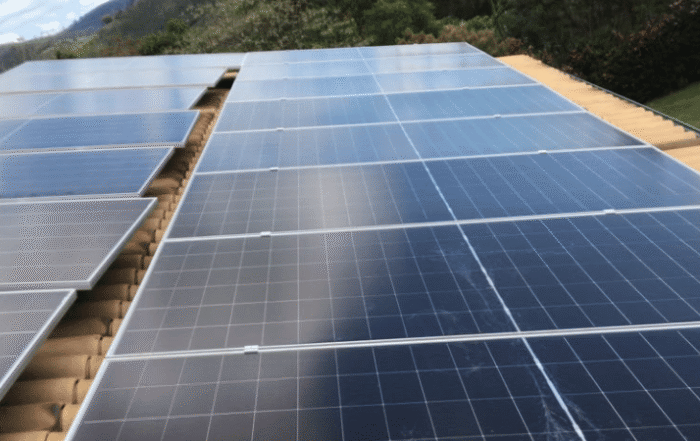
Copaíba adopts photovoltaic system and reinforces commitment to sustainability.
Copaíba adopts photovoltaic system and reinforces commitment to sustainability. The Copaíba Environmental Association has taken another decisive step in [...]
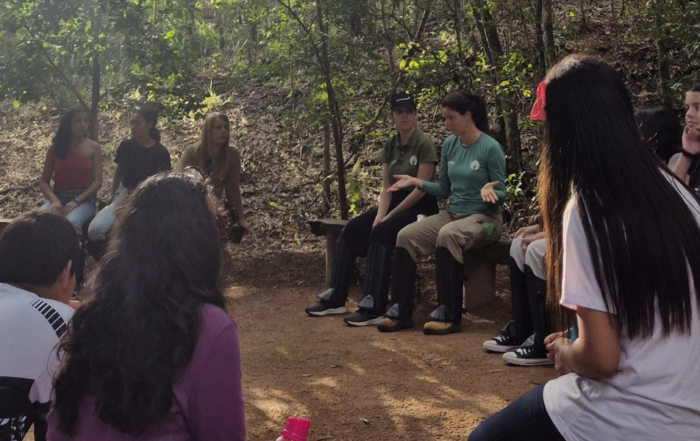
Living in contact with nature is now a right for children.
Living in contact with nature is now a right for children. On September 22, 2026, it was [...]
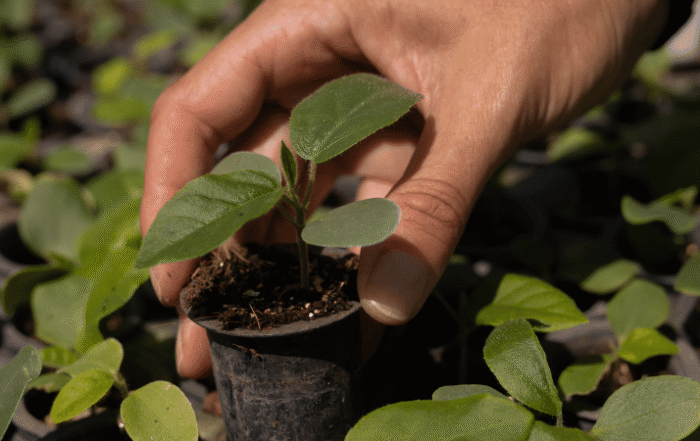
From Seed to Planting: The bottleneck that threatens the restoration of the Atlantic Forest.
From Seed to Planting: The bottleneck threatening the restoration of the Atlantic Forest. Miscommunication between those who produce seedlings [...]


