

Fruitful for whom?
Fruitful for whom?

Fruitful for whom?
We are in the height of spring, the rains return and, with them, comes the fruiting season for several native species of the Atlantic Forest, including fruit-bearing trees.
When we think of fruit trees, we usually think of the fruits that reach our table: mango, avocado, banana, orange… But none of these species are native to Brazil — and much less to the Atlantic Forest.
Why is it that we know so little about what is ours?
Nature is generous, and many native species of this biome offer tasty and nutritious fruits, which are also part of our food culture. Pitanga (uniflora eugenics), grape (eugenia pyriformis), gabiroba (Xanthocarpa Campomanesia), Araçás (Psidium spp), bauna (involucrate eugenicsand THEraticuns (Annona sppThese are just a few examples of species from our flora.
But when we talk about fruit trees, are we only talking about those that are useful for us?
This is an important question – especially for those who plant with nature conservation in mind.
The immense diversity of native trees in the Atlantic Forest provides food for a variety of animals: birds, mammals, reptiles, and even insects. Fruits are only one part of this offering – many species also serve as food for their leaves, flowers, bark, seeds, and even roots.
Node Copaiba Forest NurseryOf the 130 species we cultivate, more than 80 play a role in feeding wildlife. This demonstrates how planting native trees is essential for maintaining ecological balance and the survival of many animals.
Each animal species has its own feeding preferences and strategies:
- Monkeys feed on the leaves and fruits of canjarana (Canjerana goat), from mutambo seeds (Guazuma ulmifolia) and the fruits of the jatobá tree (Hymenaea courbaril);
- Birds appreciate the aril – a “pulp” that surrounds the seed – of species such as copaiba (Copaifera langsdorffii), camboatás (Cupania spp) and holy thorn (Maytenus ilicifolia);
- The squirrel (also known as a squirrel or caxinguelê) feeds on the fruits of the jerivá palm (Syagrus romanzoffiana) – a type of palm tree that is very ornamental indeed. It also feeds on the seeds of the Paraná pine (Araucaria angustifolia as well as countless other species of mammals and birds;
- Bats, often unfairly viewed as dangerous, are great allies of the forest. They feed on the fruits of the angelim tree (Andira spp), embiruçu (Pseudobombax grandiflorum) and guanandi (Calophyllum brasiliensis), and by transporting pollen between flowers, they ensure reproduction and the formation of new fruits.
When we learn about the relationships between trees and animals, we understand that each species plays a fundamental role. Planting fruit trees is not just planting for ourselves – it's also planting to sustain life around us.
These interactions sustain complex ecological chains that keep the forest alive and healthy. And it is in this balance that we also find the food, clean air, and beauty that make human life possible.
By choosing native fruit-bearing species for your backyard, farm, or restoration project, you can contribute to wildlife conservation, support biodiversity, and at the same time reap the benefits of this coexistence.
Trees sustain life in all its forms. The more we learn about the species, the more we learn to love and respect them.
(Article by the Nursery team)
Share!
Latest publications

Copaíba adopts photovoltaic system and reinforces commitment to sustainability.
Copaíba adopts photovoltaic system and reinforces commitment to sustainability. The Copaíba Environmental Association has taken another decisive step in [...]
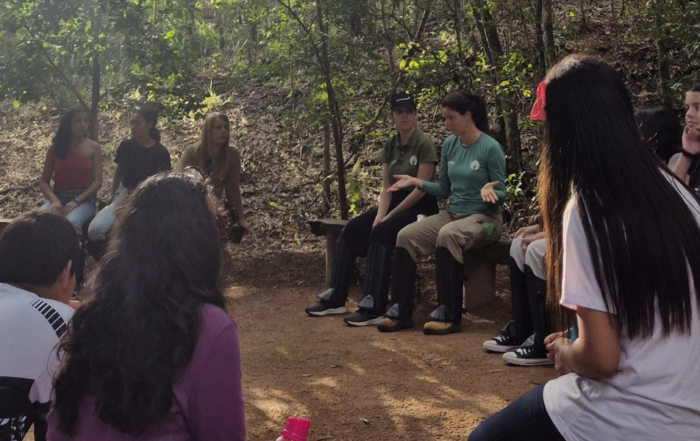
Living in contact with nature is now a right for children.
Living in contact with nature is now a right for children. On September 22, 2026, it was [...]
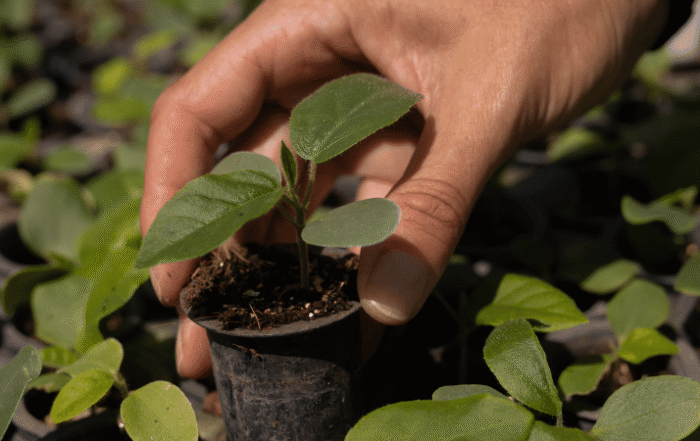
From Seed to Planting: The bottleneck that threatens the restoration of the Atlantic Forest.
From Seed to Planting: The bottleneck threatening the restoration of the Atlantic Forest. Miscommunication between those who produce seedlings [...]


