

National Atlantic Forest Day
National Atlantic Forest Day

National Atlantic Forest Day: get to know the association that has been contributing to restoring the forest and raising awareness for generations for over 25 years
The date refers to the first description of Atlantic vegetation made in 1500 by Friar Vicente do Salvador
Celebrated on May 27, National Atlantic Forest Day was established in 1999 as a way to draw society's attention to the importance of conserving one of the planet's most biodiverse biomes — and also one of the most threatened. The date refers to the first description of Atlantic vegetation made in 1500 by Friar Vicente do Salvador, and aims to reinforce the urgency of protecting the forest, promote the recovery of degraded areas and encourage public policies focused on sustainability.
The Atlantic Forest extends across 17 Brazilian states and originally covered approximately 1.3 million km². Today, only approximately 12% of its original coverage remains, according to data from the SOS Mata Atlântica Foundation. Given this scenario, several initiatives have emerged over the years to try to reverse the degradation. One of them was born in the municipality of Socorro, in the interior of São Paulo.
Founded in 1999 by a group of friends concerned about the devastation of the forest in the region, the Copaíba Environmental Association is a non-profit civil society organization, recognized as an OSCIP (Civil Society Organization of Public Interest). Since then, the organization has become a reference in ecological restoration actions, production of seedlings of native species, environmental education and participation in public policies.
Throughout its history, Copaíba has shown that change is possible and necessary. The association has already produced more than 4 million seedlings, planted more than 1 million trees, involving 700 partner landowners, and restored 809 hectares of degraded areas. In addition, more than 40 thousand people have participated in environmental education activities and experiences promoted by the organization.
Currently, Copaíba operates in 19 municipalities in the eastern region of the State of São Paulo and southern Minas Gerais — regions of the Peixe and Camanducaia Basins — contributing not only to the recovery of the Atlantic Forest, but also to the formation of a collective conscience in favor of environmental preservation, as highlighted by Ana Paula Balderi, Ecological Restoration Coordinator at Copaíba.
“On this National Atlantic Forest Day, learning about and supporting initiatives like Copaíba’s is a concrete way to participate in building a greener and more balanced future. Forest restoration not only recovers ecosystems, but also improves water and air quality and promotes biodiversity,” he points out.
Copaíba's operations are broad and structured around four main areas:
- Ecological restoration: the association carries out environmental diagnostics, designs and executes forest restoration projects, recovering degraded areas with native species from the Atlantic Forest. More than 1 million trees have already been planted and 809 hectares have been restored, in partnership with 700 rural landowners.
- Production of native seedlings: Copaíba maintains a specialized nursery with the capacity to produce thousands of seedlings of native species annually, adapted to local conditions. More than 4 million seedlings have already been produced, which supply its own projects and those of partners committed to forest recovery.
- Environmental education: through workshops, technical visits, lectures, experiences, courses and awareness campaigns, the association has already directly impacted more than 40 thousand people. The focus is to create a critical and active environmental awareness, especially among children, young people, teachers and rural communities.
- Participation in public policies: Copaíba also works to influence environmental policies at municipal and regional levels, contributing to councils, forums and partnerships that aim to strengthen sustainable development and the protection of biodiversity.
To learn more about the work of the Copaíba Environmental Association and how to contribute, visit: https://copaiba.org.br.
More about Copaiba
Created in 1999 by a group of friends who were concerned about the degradation of the Atlantic Forest in the municipality of Socorro-SP, the Copaíba Environmental Association is a non-profit organization, qualified as a Civil Society Organization of Public Interest (OSCIP) and which operates in 19 municipalities in the eastern region of the State of São Paulo and southern Minas Gerais. Currently, the association promotes ecological restoration projects and programs; production of native seedlings; environmental education initiatives and participation in public policies. In total, more than 4 million seedlings have been produced, 380 partner landowners, 713 hectares have been restored and 40 thousand participants in Environmental Education experiences. Learn more at: https://copaiba.org.br/.
Share!
Latest publications
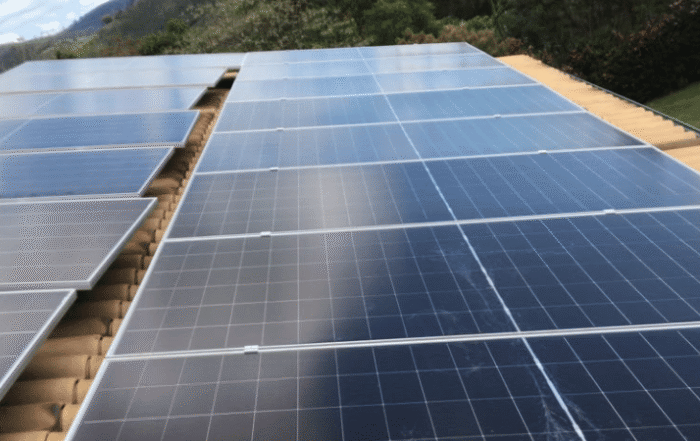
Copaíba adopts photovoltaic system and reinforces commitment to sustainability.
Copaíba adopts photovoltaic system and reinforces commitment to sustainability. The Copaíba Environmental Association has taken another decisive step in [...]
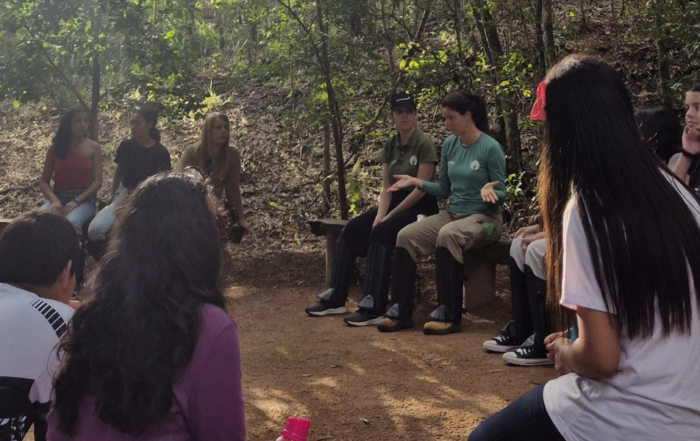
Living in contact with nature is now a right for children.
Living in contact with nature is now a right for children. On September 22, 2026, it was [...]
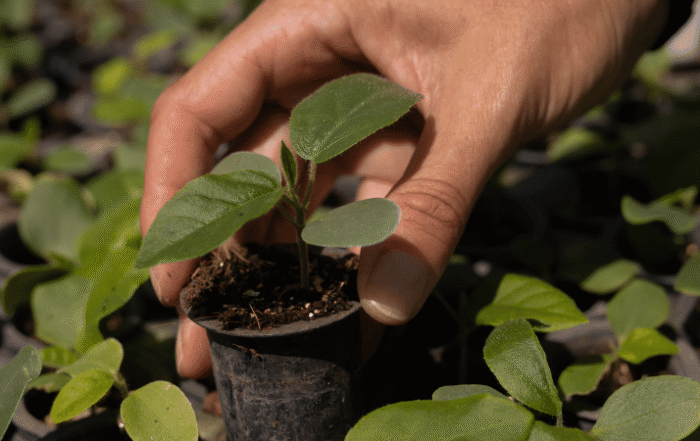
From Seed to Planting: The bottleneck that threatens the restoration of the Atlantic Forest.
From Seed to Planting: The bottleneck threatening the restoration of the Atlantic Forest. Miscommunication between those who produce seedlings [...]


