

Urban afforestation becomes a climate strategy.
Urban afforestation becomes a climate strategy.

Urban afforestation becomes a climate strategy.
Increasingly intense heat waves, extreme rainfall, and frequent flooding are impacting various cities around the world. This reality is forcing Brazilian municipalities to rethink their urban planning. In this new climatic context, trees have ceased to be merely landscaping elements and have become an essential part of urban infrastructure. Thus, the urban afforestation It has been recognized as one of the main strategies for environmental adaptation and protection of public health.
Given this scenario, the Copaiba Environmental Association draws attention to the importance of Municipal Plans for Urban Tree Planting, These are technical instruments that guide how municipalities should plan, plant, and care for trees in a continuous and strategic manner. More than just a technical document, the plan establishes permanent guidelines for integrating tree planting, urban infrastructure, and the population's quality of life.
Trees are urban infrastructure.
THE urban afforestation It involves the planning, planting, and management of trees in streets, squares, parks, and other public spaces, as well as private green areas, which also need to follow environmental criteria to offset the impacts of urbanization and ensure ecological connectivity.
In cities, trees help to reduce temperatures and mitigate heat waves, improve air quality, decrease noise pollution, absorb rainwater, and reduce flooding. They also promote urban biodiversity and contribute to the physical and mental health of the population.
“Urban afforestation is a living infrastructure. When planned correctly, it protects people and makes the city more resilient to climate change,” says Camila Conti, urban architect and president of [organization name]. Copaiba Environmental Association.
Tree planting is also a matter of social justice.
The presence of trees in Brazilian cities is still uneven. Data from the 2022 IBGE Census shows that only 35.41% of residents in favelas and urban communities live on tree-lined streets, while outside these areas the rate reaches 691%.
The reality is far from what is recommended by UN-Habitat, expressed in the so-called 3-30-300 Rule, according to which each citizen should see at least three trees from their window, live in neighborhoods with 30% of vegetation cover, and be within 300 meters of a green area.
In practice, higher-income neighborhoods concentrate the amount of tree cover, while peripheral regions remain more exposed to climate impacts.
Municipal Urban Tree Planting Plan
A large part of urban conflicts involving trees — such as falls during extreme weather events, poorly executed pruning, unsuitable species planted on sidewalks, and the uneven distribution of trees among neighborhoods — is related to the absence of a Municipal Tree Management Plan. Urban Tree Planting well structured.
The document should include an inventory of existing trees, identification of areas with tree shortages, definition of suitable species for each region of the city, establishment of goals and timelines, as well as management strategies, ongoing monitoring, and active public participation. “It’s necessary to discuss the plan with the population and understand that each area of the city has specific needs. We need to understand what kind of city we want to build,” says Camila Conti.
National progress and regional challenges
During COP30, held in Brazil in November 2025, the Ministry of Environment and Climate Change (MMA) approved the National Plan for Urban Tree Planting (PlaNAU), which establishes goals to expand public access to green areas by 2045, in addition to guiding municipalities in the development of municipal plans.
The municipality of Socorro approved its Municipal Plan of Urban Tree Planting The city has been implementing its guidelines since 2023. According to the Municipal Secretary of the Environment, Marcos Lomonico, the plan allows for the identification of areas with low vegetation cover and guides priority actions. "The plan directly contributes to reducing heat islands, increasing air humidity, and improving the well-being of the population. Planting trees today is a public policy for climate adaptation," he states.
The city of Amparo has been working on and developing its municipal plan, and according to the municipal secretary of Environment and Animal Welfare, Walter Tozzi, the project is in its final stages of preparation and will soon be sent to the legislature for approval.
For the Copaiba, It is important and urgent that all 19 municipalities belonging to the basins of the Peixe and Camanducaia rivers have plans to ensure the region is environmentally balanced. “The environment does not respect administrative boundaries. When a city plans its green spaces, it contributes to the climatic and hydrological regulation of the entire region,” emphasizes Camila Conti.
The role of the citizen
Another important point highlighted by Copaiba It is the effective participation of the population that should demand the development and implementation of a Plan of AUrban tree planting, In addition to reporting illegal logging, preventing planting and pruning without technical guidance, and supporting environmental education initiatives, the president of the organization emphasizes, "The plan needs to move beyond the planning stage. Knowing about and monitoring its implementation is both a right and a civic responsibility." Copaiba, Camila Conti.
Plan, plant and care
International experiences show that cities around the world are transforming paved streets and impermeable areas into green corridors and urban forests to address the climate emergency. Copaiba Environmental Association, The regional approach relies less on isolated actions and more on continuous planning. Planting trees is important, but ensuring they grow healthy and become part of the urban fabric is what truly transforms cities.
Contact your city's municipal environmental department and inquire about the Municipal Urban Tree Planting Plan; if one doesn't exist, request its creation. For more information on the importance of tree planting, native species, and other topics related to the restoration of the Atlantic Forest, visit [website address - please insert here]. Copaiba website.
About Copaiba
Founded in 1999, the Copaiba Environmental Association It works in the conservation and restoration of the Atlantic Forest in the Camanducaia and Peixe river basins, developing projects for ecological restoration, production of native seedlings, environmental education, social mobilization, and support for the construction of environmental public policies.
Share!
Latest publications
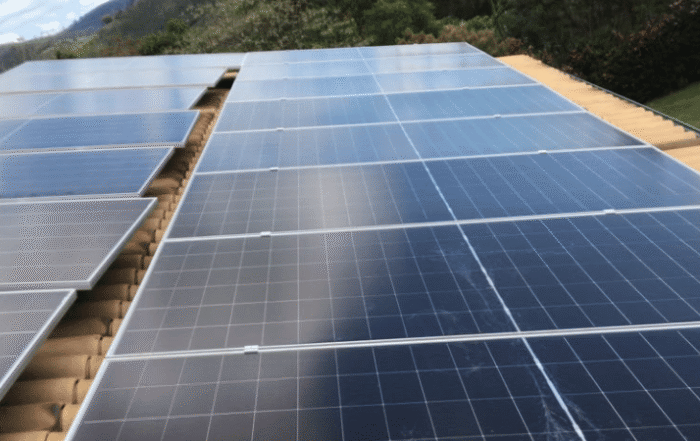
Copaíba adopts photovoltaic system and reinforces commitment to sustainability.
Copaíba adopts photovoltaic system and reinforces commitment to sustainability. The Copaíba Environmental Association has taken another decisive step in [...]
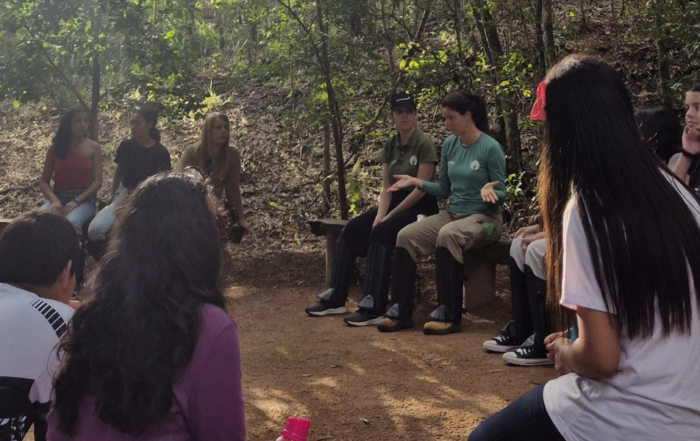
Living in contact with nature is now a right for children.
Living in contact with nature is now a right for children. On September 22, 2026, it was [...]
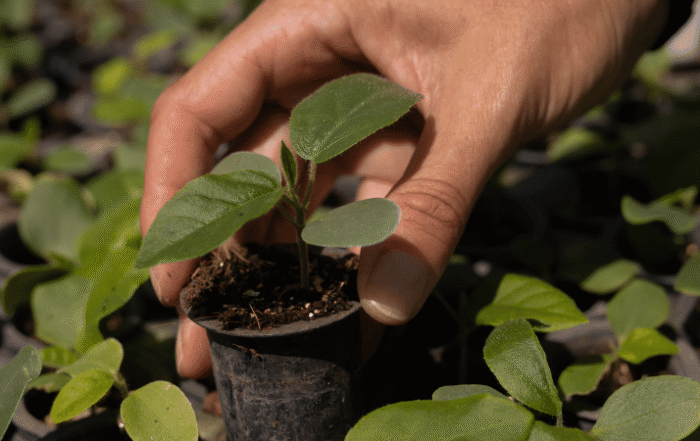
From Seed to Planting: The bottleneck that threatens the restoration of the Atlantic Forest.
From Seed to Planting: The bottleneck threatening the restoration of the Atlantic Forest. Miscommunication between those who produce seedlings [...]


